Well Water Filter System Guide for South Florida Homes
Discover the essential guide to choosing and maintaining a well water filter system for your South Florida home. Expert tips on filtration options.
By the WaterLux Editorial Team · Published 2026-03-15 · Updated 2026-10-25
Frequently Asked Questions
Do I need a filter for well water in South Florida?
Last updated: April 2026 · Reviewed by WaterLux Water Treatment specialists
The short answer: Yes, water filtration systems work effectively in South Florida when properly matched to local water conditions. Broward County tap water typically contains chlorine, hard minerals, and trace contaminants that basic pitcher filters cannot adequately remove. A whole-house system or under-sink reverse osmosis unit removes up to 99% of impurities.
Yes — South Florida well water typically contains hardness levels of 10.8–22.2 GPG before treatment (extremely hard), along with iron, hydrogen sulfide, tannins, and potential agricultural contaminants. Unlike city water, private wells receive no municipal treatment, so filtration is entirely the homeowner's responsibility. WaterLux recommends a multi-stage system including a water softener, iron/sulfur filter, and carbon filtration for comprehensive well water treatment.
How hard is the water in Broward County, Florida?
Broward County groundwater is classified as hard to very hard, with most homes receiving water measuring 10.8–22.2 GPG before treatment. The Biscayne Aquifer, which supplies municipal water throughout the region, filters through limestone and naturally accumulates high concentrations of calcium and magnesium. WaterLux offers free in-home water testing to measure your exact hardness level.
Does South Florida tap water contain PFAS?
Yes, Broward County water systems have detected PFAS compounds including PFOA and PFOS at trace levels. The 2024 Broward County Water Quality Report showed PFOS at approximately 0.02 µg/L — levels that approach or exceed the EPA's proposed 4 ppt MCL in some samples. Reverse osmosis is the most effective home treatment for PFAS removal, achieving 90–99% reduction.
Why does my South Florida water smell like chlorine?
Most South Florida municipalities, including Pompano Beach and Broward County utilities, use chloramines (a blend of chlorine and ammonia) rather than free chlorine to disinfect drinking water. Chloramines leave a persistent chemical taste and odor that does not dissipate by letting water sit out. A whole-house activated carbon filter with NSF/ANSI 42-certified catalytic carbon media effectively removes chloramines from every tap in your home.
Where does South Florida's municipal water come from?
Most of Broward, Palm Beach, and Miami-Dade Counties draw municipal water from the Biscayne Aquifer, a shallow limestone formation that sits close to the surface. While highly productive, the aquifer's limestone geology naturally dissolves calcium and magnesium into the water (creating South Florida's characteristic 10.8–22.2 GPG before treatment hardness on well water), and its proximity to the surface makes it susceptible to agricultural runoff, saltwater intrusion, and PFAS contamination.
Last updated: March 2026 by WaterLux Water Systems — serving Broward, Palm Beach, and Miami-Dade Counties since 2011.
WaterLux is an 4.9-star Google rating and 109+ customer reviews and authorized Hague dealer with a commitment to transparent pricing and expert service across Broward, Palm Beach, and Miami-Dade Counties.
Homeowners relying on private wells for their water supply face unique challenges that municipal water users never encounter. Unlike city water that undergoes treatment at centralized facilities, well water quality depends entirely on the homeowner's initiative to test, monitor, and treat their supply. A well water filter system serves as the primary defense against contaminants ranging from sediment and minerals to bacteria and chemical pollutants. For South Florida residents, where groundwater characteristics vary significantly across Broward, Palm Beach, and Miami-Dade counties, understanding filtration options becomes essential for protecting family health and home appliances.
Understanding Well Water Contamination Risks
South Florida private wells draw from the Biscayne Aquifer, a limestone formation that naturally produces water with 10.8–22.2 GPG before treatment hardness — far above the 7 GPG threshold considered hard. Beyond hardness, well owners frequently encounter iron (causing rust stains), hydrogen sulfide (rotten egg odor), tannins, bacteria, and agricultural contaminants from Broward and Palm Beach County farmland. Unlike city water, private wells receive no municipal treatment, making filtration entirely the homeowner's responsibility.
Private wells draw water from underground aquifers that naturally filter through soil and rock layers. However, this natural filtration process cannot remove all contaminants, and groundwater systems face specific treatment challenges depending on local geology and environmental factors.
Common Contaminants in South Florida Well Water
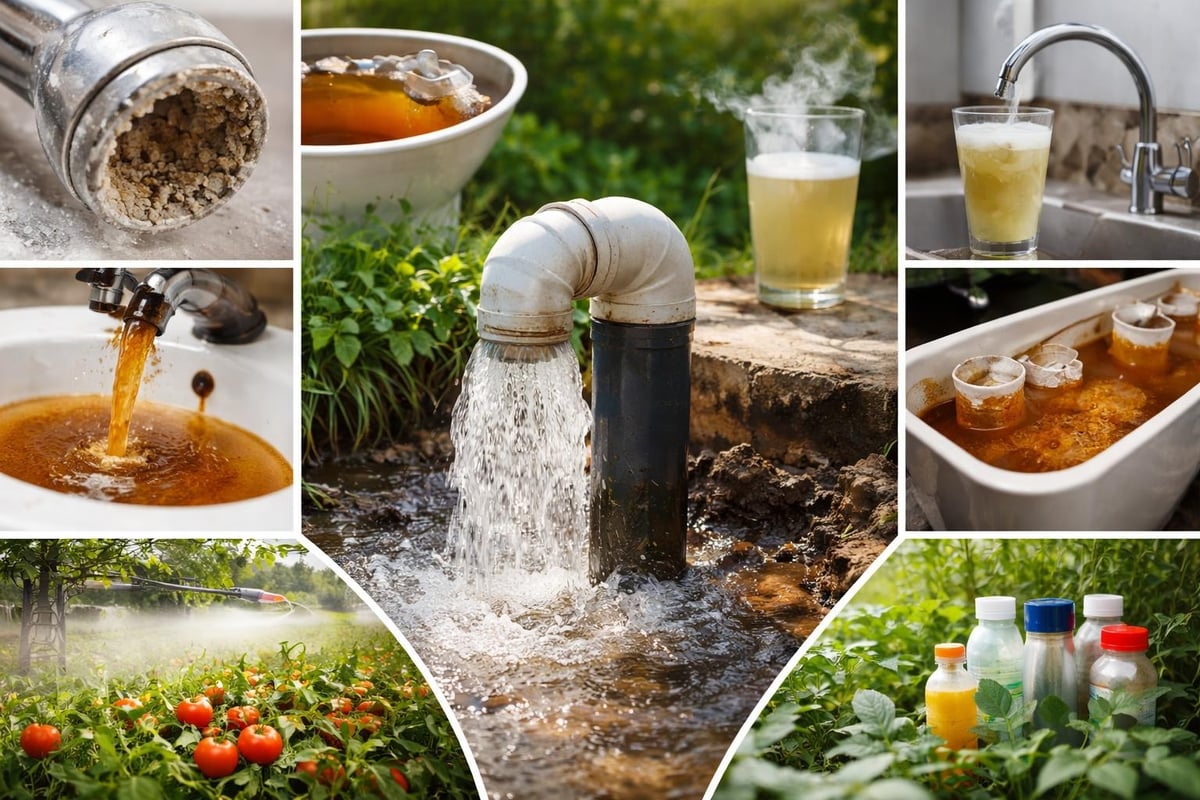
The limestone geology prevalent throughout South Florida creates distinct water quality challenges. Hard water containing elevated calcium and magnesium levels affects nearly every private well in the region. Beyond hardness, well owners frequently encounter:
- Iron and manganese causing rust-colored staining
- Sulfur compounds producing unpleasant odors
- Tannins from organic matter creating yellow or brown discoloration
- Bacteria including coliform and E. coli
- Nitrates from agricultural runoff or septic systems
- Chlorides from saltwater intrusion in coastal areas
Agricultural activities in western Palm Beach County and parts of Miami-Dade introduce additional concerns. Pesticides, herbicides, and fertilizers can migrate into groundwater supplies over time. Understanding well water purification needs starts with comprehensive testing to identify specific contaminants present in your supply.
Health and Household Implications
Contaminated well water poses risks extending beyond taste and odor concerns. Bacterial contamination can cause serious illness, particularly affecting children, elderly individuals, and those with compromised immune systems. Nitrate levels exceeding EPA guidelines present special dangers for infants, potentially causing methemoglobinemia or "blue baby syndrome."
Hard water accelerates appliance deterioration, reducing the lifespan of water heaters, washing machines, and dishwashers by years. Scale buildup within pipes restricts flow and decreases efficiency. Iron and sulfur staining permanently damages fixtures, clothing, and surfaces despite vigorous cleaning efforts.
Essential Components of a Well Water Filter System
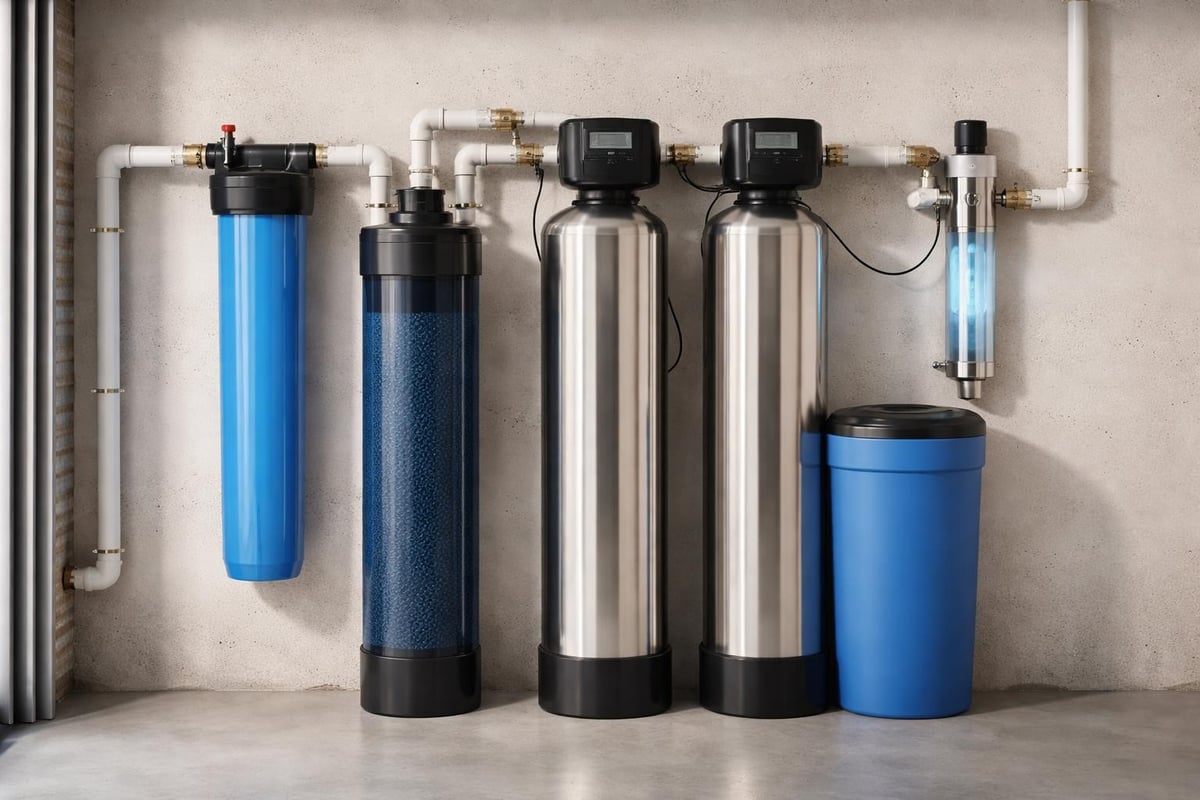
Effective well water treatment requires a systematic approach addressing multiple contamination categories. No single filter handles every issue, making multi-stage filtration the industry standard for comprehensive protection.
Pre-Filtration and Sediment Removal
The first line of defense in any well water filter system captures particulate matter before it reaches downstream components. Sediment filters remove:
- Sand and silt particles
- Rust flakes from well casings
- Scale fragments
- Organic debris
Cartridge specifications matter considerably. Five-micron filters handle most applications effectively, while wells with heavy sediment may require 20-micron filters to prevent frequent clogging. Whole-house sediment filters protect the entire treatment system and household plumbing infrastructure.
Backwashing sediment filters offer advantages for high-sediment wells. These systems automatically flush accumulated debris, eliminating manual cartridge replacement. The initial investment exceeds traditional cartridge systems, but operational convenience and long-term cost savings justify the expense.
Chemical and Mineral Filtration Technologies
Carbon filtration addresses chemical contaminants and improves aesthetic water qualities. Activated carbon media removes chlorine, pesticides, herbicides, volatile organic compounds, and certain industrial chemicals through adsorption processes. Carbon filters also eliminate taste and odor compounds including hydrogen sulfide.
| Filtration Technology | Primary Applications | Maintenance Requirements | Typical Lifespan |
|---|---|---|---|
| Activated Carbon | Chemicals, taste, odor | Replace every 6-12 months | 6-12 months |
| Catalytic Carbon | Chloramines, heavy metals | Replace every 12-18 months | 12-18 months |
| Water Softener | Hardness, iron (low levels) | Salt addition monthly | 10-15 years |
| Iron Filter | Iron, manganese, sulfur | Backwash cycle maintenance | 8-12 years |
Water softeners specifically target hardness minerals through ion exchange. Sodium or potassium ions replace calcium and magnesium, preventing scale formation throughout the plumbing system. Many South Florida homeowners benefit from installing a water softener system as their primary mineral control solution.
Specialized iron filters employ oxidation and filtration to remove elevated iron and manganese concentrations. These systems convert dissolved minerals into solid particles that filtration media captures. Choosing appropriate iron filtration depends on iron concentration levels and whether the iron exists in ferrous or ferric form.
Disinfection Methods
Bacterial contamination requires dedicated disinfection technology beyond mechanical filtration. Two primary approaches dominate residential well water treatment:
Ultraviolet (UV) disinfection represents the preferred method for most applications. UV systems expose water to ultraviolet light at specific wavelengths that destroy bacteria, viruses, and protozoa DNA. This process provides chemical-free disinfection without altering water taste or chemistry. UV systems require electricity and periodic bulb replacement, typically annually. Proper pre-filtration ensures UV effectiveness since turbidity and particles can shield microorganisms from UV exposure.
Chemical disinfection using chlorine injection offers an alternative where electricity availability poses challenges. These systems introduce precise chlorine dosages upstream, allowing contact time before carbon filtration removes residual chlorine. Chemical feed pumps require more maintenance but handle heavily contaminated wells effectively.
Understanding well water system fundamentals helps homeowners select appropriate disinfection approaches for their specific situations.
Selecting the Right Well Water Filter System
The optimal filtration configuration depends on water test results, household size, flow rate requirements, and budget considerations. Cookie-cutter solutions rarely address individual well water challenges effectively.
Water Testing Requirements
Professional water testing provides the foundation for informed system selection. Standard well water tests should analyze:
- Total coliform and E. coli bacteria
- pH levels
- Hardness (calcium and magnesium)
- Iron and manganese
- Nitrates and nitrites
- Total dissolved solids
- Sulfur compounds
Extended testing panels add pesticides, heavy metals, and other contaminants based on local risk factors. Testing should occur before system selection and annually thereafter to monitor performance and changing conditions. Selecting appropriate home water filters begins with understanding exactly what contaminants require removal.
System Sizing and Flow Rate Considerations
Residential well water filter systems must deliver adequate flow rates during peak demand periods without pressure loss. Undersized systems create frustration when multiple fixtures operate simultaneously.
Typical household flow requirements:
- Single bathroom home: 6-8 gallons per minute (GPM)
- Two bathroom home: 8-12 GPM
- Three bathroom home: 12-16 GPM
- Four or more bathrooms: 16-20 GPM
Component sizing throughout the system affects overall performance. Sediment filters, carbon tanks, and UV chambers rated below household flow requirements create bottlenecks. Professional installers calculate pressure drop across each component, ensuring the complete system maintains acceptable flow rates and pressure.
Storage tanks sometimes supplement systems where well pump capacity limits flow. These pressure tanks provide reserve capacity during high-demand periods, preventing pump cycling and extending equipment life.
Point-of-Use Versus Whole-House Treatment
Whole-house systems treat water at the point of entry, protecting every fixture and appliance. This comprehensive approach prevents contaminant exposure through all water uses including showering, cooking, and laundry. The development of effective point-of-use decontamination systems has expanded options, but whole-house treatment provides superior protection for most situations.
Point-of-use systems concentrate treatment at specific locations, typically kitchen sinks. Under-sink reverse osmosis systems excel at removing dissolved contaminants including heavy metals, fluoride, and total dissolved solids. These systems complement whole-house treatment by providing additional purification for drinking and cooking water.
| System Type | Coverage | Installation Complexity | Cost Range | Best Applications |
|---|---|---|---|---|
| Whole-House | Complete property | Professional required | From $2,000+ | Comprehensive protection |
| Point-of-Entry | Main water line | Professional required | From $1,500 | Targeted treatment |
| Point-of-Use | Single fixture | DIY or professional | From $200 | Drinking water enhancement |
| Under-Sink RO | Kitchen sink | Moderate DIY | From $300 | Final purification stage |
Installation and Maintenance Best Practices
Proper installation and ongoing maintenance determine well water filter system longevity and effectiveness. Shortcuts during installation create problems requiring expensive corrections later.
Professional Installation Advantages
Licensed plumbers and water treatment specialists bring expertise that DIY installations cannot match. Professional installers understand local code requirements, proper drainage configurations, and equipment integration. They correctly size components, ensure adequate space for maintenance access, and configure systems for optimal performance.
Professional installation provides:
- Warranty protection (many manufacturers require professional installation)
- Code compliance verification
- Proper backflow prevention
- Correct electrical connections for UV and control systems
- System startup and testing
- Owner training on operation and maintenance
South Florida homeowners seeking reliable installation should explore comprehensive water treatment services from established providers with regional experience.
Routine Maintenance Requirements
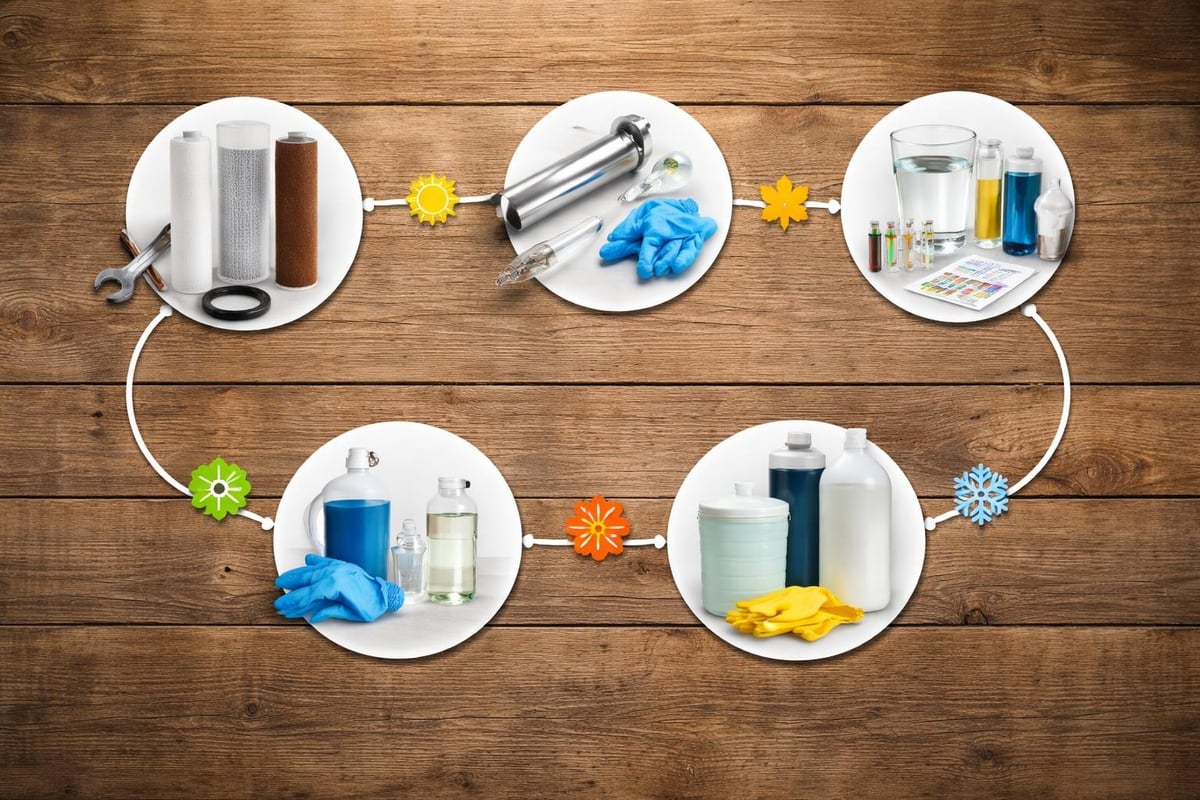
Well water filter systems require regular attention to maintain performance standards. Neglected maintenance allows contaminants to pass through exhausted media or compromised components.
Essential maintenance tasks include:
- Sediment filter replacement every 3-6 months
- Carbon filter replacement every 6-12 months
- Water softener salt replenishment monthly
- UV bulb replacement annually
- System sanitization annually
- Iron filter backwash cycle monitoring
- Pressure gauge monitoring
Establishing a maintenance schedule prevents oversights. Many homeowners benefit from maintenance agreements with professional water treatment companies that provide scheduled service, component replacement, and performance testing.
Troubleshooting Common Issues
Even properly maintained systems occasionally develop problems requiring attention. Recognizing symptoms enables prompt resolution before minor issues escalate.
Pressure reduction typically indicates clogged sediment filters or exhausted media requiring replacement. Checking pressure gauges before and after filter housings pinpoints restriction locations.
Water discoloration after treatment suggests media exhaustion or bacterial growth within filter housings. Brown or yellow water indicates iron filter media replacement needs, while black particles suggest carbon filter deterioration.
Odor return signals carbon filter saturation or UV system failure. Sulfur smells require carbon replacement, while bacterial odors may indicate UV bulb failure or inadequate disinfection contact time.
Advanced Treatment Options for Specific Challenges
Certain contamination scenarios require specialized treatment approaches beyond standard filtration configurations. South Florida's diverse geology creates localized challenges that standard systems inadequately address.
Saltwater Intrusion Solutions
Coastal properties face increasing saltwater intrusion risks as sea levels rise. Elevated chloride and sodium concentrations affect water taste and household use. Reverse osmosis provides the most effective chloride removal technology, though whole-house RO systems involve substantial investment.
Blending treated and untreated water reduces costs while achieving acceptable quality levels. Small RO systems treat a portion of household water, which mixes with untreated supply for non-potable uses. This approach concentrates treatment costs on water consumed directly.
Heavy Contamination Scenarios
Wells with multiple serious contaminants require comprehensive treatment trains combining several technologies. A typical heavy contamination system might include:
- Sediment pre-filtration (20 micron)
- Chemical injection for oxidation
- Contact tank for reaction time
- Secondary sediment filtration (5 micron)
- Carbon filtration
- Water softening
- UV disinfection
- Final polishing filter
These complex systems demand professional design considering water chemistry interactions between treatment stages. Homeowners facing severe contamination should request detailed water quality assessments and system proposals from experienced treatment specialists.
Emerging Contaminant Concerns
Recent attention to PFAS (per- and polyfluoroalkyl substances) and microplastics raises new treatment considerations. Standard carbon filtration provides limited PFAS removal, while specialized activated carbon formulations and advanced filtration technologies offer improved performance.
Microplastic removal requires fine filtration media capable of capturing particles below one micron. Reverse osmosis systems effectively remove microplastics, providing protection against these emerging contaminants of concern.
Financial Considerations and Long-Term Value
Well water filter system investments range from several hundred dollars for basic point-of-use units to over ten thousand dollars for comprehensive whole-house treatment addressing multiple contamination categories. Understanding total cost of ownership guides informed purchasing decisions.
Initial Investment Breakdown
Equipment costs represent only one component of total system expense. Complete installation projects include:
- Equipment and components (40-60% of total)
- Professional installation labor (25-35% of total)
- Permits and inspections (5-10% of total)
- Initial water testing (5-10% of total)
- Electrical work for UV systems (variable)
Operating Costs and Replacement Schedules
Ongoing operational expenses vary based on system complexity and local water quality. Typical annual costs include:
| Expense Category | Annual Cost Range | Notes |
|---|---|---|
| Replacement filters | From $100 | Depends on usage and water quality |
| Water softener salt | From $60 | Based on hardness and consumption |
| UV bulb replacement | From $60 | Annual replacement recommended |
| Professional maintenance | From $150 | Optional but recommended |
| Electricity (UV/controls) | From $20 | Minimal power consumption |
| Annual water testing | From $75 | Comprehensive testing panel |
Property Value Impact
Whole-house water treatment systems enhance property values, particularly in areas with known water quality challenges. Home buyers increasingly prioritize water quality, making installed treatment systems attractive features. Professionally installed systems from reputable manufacturers provide the strongest value additions.
Documentation proving regular maintenance and recent water test results demonstrating system effectiveness strengthens selling points. Complete whole house filtration systems installed by licensed professionals offer the best return on investment compared to DIY installations or low-quality equipment.
Why WaterLux?
- 4.9-star rating from 100+ Google reviews
- Authorized Hague Quality Water dealer and Aquaphor distributor
- Over 14 years serving South Florida families
- families served across Broward, Palm Beach, and Miami-Dade Counties
- Free water testing — call 754-317-0104 to schedule. We show you exactly what's in your water
Regulatory Compliance and Safety Standards
Private well owners bear sole responsibility for water quality since wells fall outside municipal water system regulations. Understanding applicable standards guides treatment decisions even without enforcement mechanisms.
EPA Guidelines for Private Wells
The Environmental Protection Agency establishes drinking water standards that, while not legally binding for private wells, provide essential safety benchmarks. Maximum contaminant levels (MCLs) identify concentrations above which health risks increase unacceptably.
Key EPA standards relevant to well water include:
- Total coliform: zero colonies per 100ml
- E. coli: zero colonies per 100ml
- Nitrate: 10 mg/L maximum
- Arsenic: 10 parts per billion maximum
- Lead: 15 parts per billion action level
Regular testing against these standards ensures family safety. Wellhead protection programs established in some areas provide additional safeguards for groundwater supplies.
NSF/ANSI Certification Standards
Equipment selection should prioritize products certified to NSF/ANSI standards verifying performance claims. These independent certifications test specific contaminant reduction capabilities:
- NSF/ANSI 42: Aesthetic effects (taste, odor, chlorine)
- NSF/ANSI 53: Health effects (lead, cysts, VOCs)
- NSF/ANSI 55: UV disinfection systems
- NSF/ANSI 58: Reverse osmosis systems
- NSF/ANSI 61: Materials safety (no contaminant leaching)
Certification ensures equipment performs as advertised and contains no harmful materials that could contaminate treated water. Reputable manufacturers prominently display relevant certifications for their products.
Selecting and maintaining an appropriate well water filter system protects both family health and substantial home infrastructure investments. The complexity of treatment options requires careful water analysis, professional guidance, and commitment to ongoing maintenance. Whether addressing basic hardness and sediment or tackling complex contamination challenges, WaterLux brings decades of South Florida experience to every installation. From comprehensive water testing through system design, professional installation, and reliable maintenance services, WaterLux ensures your well water meets the highest quality standards for generations to come.
Frequently Asked Questions
- What is the best water treatment for Florida well water?
- Florida well water (14 GPG before treatment hardness, high iron/sulfur at 3-8 mg/L typical) needs a 3-4 stage system: sediment filter (20-5 microns), carbon block (chlorine/odor if iron present), iron/sulfur cartridge (manganese dioxide, 3-6 mg/L removal), optional softener. RO is secondary for drinking water. WaterLux has treated South Florida well-water homes.
- Do I need a water softener in South Florida?
- For well water in South Florida, yes—well hardness averages 10.8–22.2 GPG before treatment versus 10.8–22.2 GPG before treatment municipal. A salt-based softener (From $3,600) is essential. Without it, 40% faster appliance failure, scale buildup, and 30% increased soap use. Well water + high iron demands a quality softener protecting $15,000+ in appliances.
- What is a typical water treatment cost?
- South Florida well-water systems cost From $3,000 for complete setup (softener $2,200 + iron/sulfur filter From $800 + pre-filters From $300). WaterLux well-water specialists test YOUR well first, then design a custom system. Call 754-317-0104 for a free well-water analysis and cost estimate.
- Does WaterLux offer free water testing?
- Yes. WaterLux provides free professional water testing for homeowners across Broward, Palm Beach, and Miami-Dade Counties. A technician tests your water on-site and explains exactly what contaminants are present. Call 754-317-0104 to schedule.
- How long has WaterLux been serving South Florida?
- WaterLux has been providing water treatment across South Florida for over 14 years, serving families in Broward, Palm Beach, and Miami-Dade Counties. We are an authorized Hague Quality Water dealer and Aquaphor distributor with a 4.9-star Google rating. Call 754-317-0104 for your free consultation.
Sources:
- U.S. Geological Survey — Water Hardness and Alkalinity
- EPA — Ground Water and Drinking Water Standards
- Water Quality Association — Hard Water Treatment Methods
- Florida DEP — Drinking Water Program
Ready for Better Water?
waterlux.com — Free water test & consultation
4.9★ across 108 Google reviews · licensed & insured.