Carbon Filter for Well Water: Complete 2026 Guide
Discover how carbon filters remove contaminants from well water. Learn about types, benefits, maintenance, and installation for South Florida homes.
By the WaterLux Editorial Team · Published 2026-03-11 · Updated 2026-10-18
Frequently Asked Questions
Do I need a filter for well water in South Florida?
Last updated: April 2026 · Reviewed by WaterLux Water Treatment specialists
The short answer: Yes, water filtration systems work effectively in South Florida when properly matched to local water conditions. Broward County tap water typically contains chlorine, hard minerals, and trace contaminants that basic pitcher filters cannot adequately remove. A whole-house system or under-sink reverse osmosis unit removes up to 99% of impurities.
Yes — South Florida well water typically contains hardness levels of 10.8–22.2 GPG before treatment (extremely hard), along with iron, hydrogen sulfide, tannins, and potential agricultural contaminants. Unlike city water, private wells receive no municipal treatment, so filtration is entirely the homeowner's responsibility. WaterLux recommends a multi-stage system including a water softener, iron/sulfur filter, and carbon filtration for comprehensive well water treatment.
How hard is the water in Broward County, Florida?
Broward County groundwater is classified as hard to very hard, with most homes receiving water measuring 10.8–22.2 GPG before treatment. The Biscayne Aquifer, which supplies municipal water throughout the region, filters through limestone and naturally accumulates high concentrations of calcium and magnesium. WaterLux offers free in-home water testing to measure your exact hardness level.
Does South Florida tap water contain PFAS?
Yes, Broward County water systems have detected PFAS compounds including PFOA and PFOS at trace levels. The 2024 Broward County Water Quality Report showed PFOS at approximately 0.02 µg/L — levels that approach or exceed the EPA's proposed 4 ppt MCL in some samples. Reverse osmosis is the most effective home treatment for PFAS removal, achieving 90–99% reduction.
Why does my South Florida water smell like chlorine?
Most South Florida municipalities, including Pompano Beach and Broward County utilities, use chloramines (a blend of chlorine and ammonia) rather than free chlorine to disinfect drinking water. Chloramines leave a persistent chemical taste and odor that does not dissipate by letting water sit out. A whole-house activated carbon filter with NSF/ANSI 42-certified catalytic carbon media effectively removes chloramines from every tap in your home.
Where does South Florida's municipal water come from?
Most of Broward, Palm Beach, and Miami-Dade Counties draw municipal water from the Biscayne Aquifer, a shallow limestone formation that sits close to the surface. While highly productive, the aquifer's limestone geology naturally dissolves calcium and magnesium into the water (creating South Florida's characteristic 10.8–22.2 GPG before treatment hardness on well water), and its proximity to the surface makes it susceptible to agricultural runoff, saltwater intrusion, and PFAS contamination.
Last updated: March 2026 by WaterLux Water Systems — serving Broward, Palm Beach, and Miami-Dade Counties since 2011.
WaterLux is an 4.9-star Google rating and 109+ customer reviews and authorized Hague dealer with a commitment to transparent pricing and expert service across Broward, Palm Beach, and Miami-Dade Counties.
South Florida homeowners with private wells face unique water quality challenges that demand reliable filtration solutions. From sulfur odors to organic compounds and chemical contaminants, well water often contains impurities that affect both taste and safety. A carbon filter for well water represents one of the most effective treatment methods available, using activated carbon media to trap and remove a wide range of contaminants through adsorption. Understanding how these systems work and their specific applications helps property owners make informed decisions about protecting their water supply.
Understanding Carbon Filtration Technology
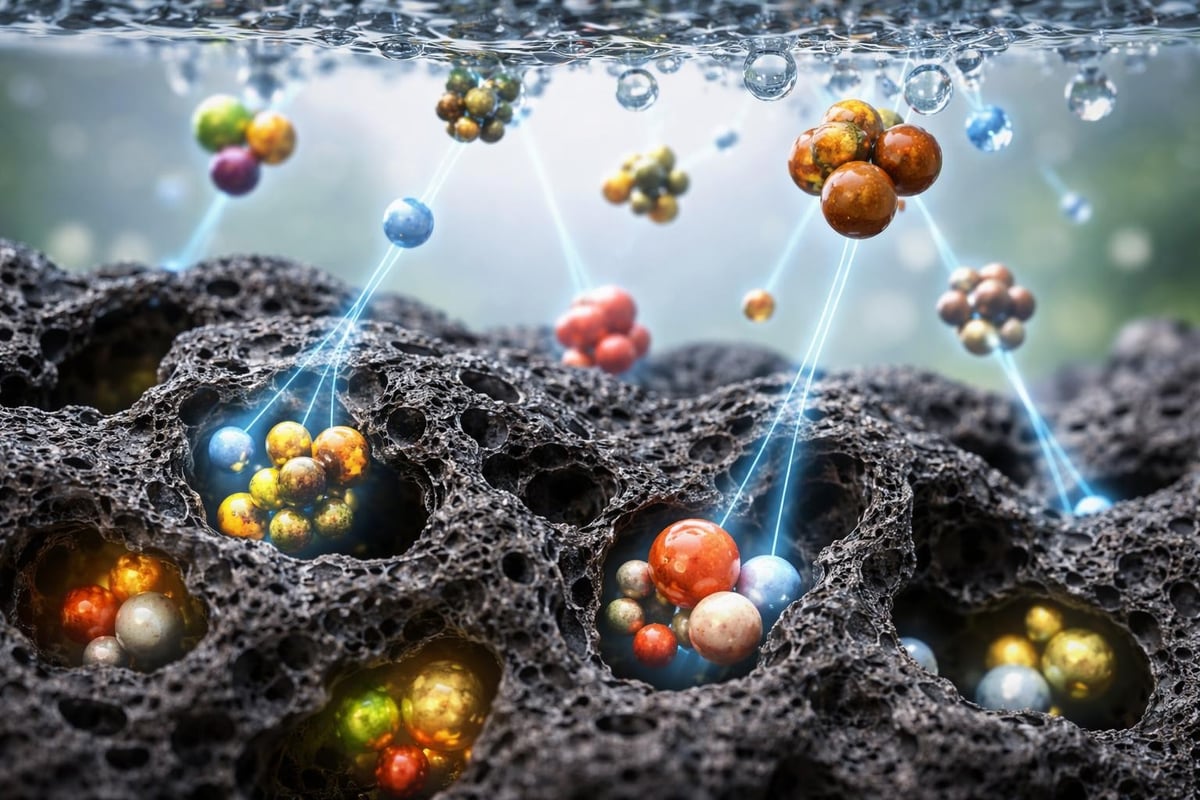
Carbon filters work through adsorption — contaminant molecules bond chemically to the surface of activated carbon particles. A single gram of activated carbon contains a surface area equivalent to several football fields, giving it extraordinary capacity to capture chlorine, chloramines, volatile organic compounds (VOCs), hydrogen sulfide, and many other contaminants found in South Florida well water. For well owners in Broward and Palm Beach Counties, activated carbon is a foundational component of any multi-stage treatment system.
Carbon filters operate through a process called adsorption, where contaminant molecules bond to the surface of activated carbon particles. Unlike absorption, which involves one substance permeating another, adsorption creates a chemical attraction between pollutants and the carbon surface. This occurs because activated carbon has an incredibly porous structure, with a single gram containing a surface area equivalent to several football fields.
The effectiveness of a carbon filter for well water depends on several factors, including contact time, water flow rate, and the specific type of carbon media used. Granular activated carbon (GAC) and carbon block filters represent the two primary configurations, each offering distinct advantages for well water treatment.
Types of Carbon Media
Granular Activated Carbon (GAC) consists of loose carbon particles ranging from 0.4 to 2.4 millimeters in diameter. These systems allow water to flow through the carbon bed, providing excellent contact time and high flow rates. Granular activated carbon treatment has proven particularly effective for removing organic chemicals, chlorine, and taste and odor compounds from private well systems.
Carbon Block Filters use compressed carbon particles formed into solid blocks. This configuration offers several advantages:
- Higher contaminant removal efficiency
- Smaller micron ratings for sediment filtration
- Reduced channeling and bypass
- Longer contact time at equivalent flow rates
- More consistent performance across the filter lifespan
Catalytic Carbon represents an advanced form of activated carbon specially treated to enhance chloramine removal and catalytic oxidation of certain contaminants. This media excels at removing hydrogen sulfide and supporting biological filtration processes.
Contaminants Removed by Carbon Filtration
A properly sized carbon filter for well water addresses numerous water quality issues common in South Florida's geology and aquifer systems. The performance varies based on the specific contaminant, water chemistry, and system design.
Organic Compounds and Chemicals
Carbon filtration excels at removing organic chemicals including:
- Volatile organic compounds (VOCs)
- Pesticides and herbicides
- Industrial solvents
- Petroleum products
- Trihalomethanes (THMs)
- Benzene and toluene
According to research on activated carbon treatment effectiveness, these filters demonstrate high removal rates for hundreds of synthetic organic chemicals commonly found in groundwater.
Taste and Odor Issues
Well water frequently develops unpleasant characteristics that carbon filtration effectively addresses:
- Chlorine and chloramine odors
- Rotten egg smell from hydrogen sulfide
- Musty or earthy tastes from organic matter
- Chemical tastes from industrial contamination
- Metallic flavors from dissolved metals
Limitations and What Carbon Cannot Remove
Understanding the limitations of carbon filtration proves equally important for proper system design. Carbon filters do not effectively remove:
| Contaminant Type | Removal Efficiency | Alternative Treatment |
|---|---|---|
| Heavy metals (lead, mercury) | Poor to moderate | Reverse osmosis, ion exchange |
| Dissolved minerals (hardness) | Ineffective | Water softeners |
| Nitrates/nitrites | Ineffective | Reverse osmosis, ion exchange |
| Bacteria and viruses | Limited | UV disinfection, chlorination |
| Fluoride | Poor | Reverse osmosis, activated alumina |
| Total dissolved solids | Minimal | Reverse osmosis |
For comprehensive treatment, many South Florida homeowners combine whole house filtration systems with complementary technologies addressing specific water quality concerns.
Sizing and System Configuration
Proper sizing ensures optimal performance and longevity for well water carbon filtration systems. Several factors influence the appropriate system size and configuration for residential applications.
Flow Rate Requirements
Household water demands vary significantly based on:
- Number of occupants and bathrooms
- Simultaneous fixture usage patterns
- Peak demand periods
- Appliance requirements
- Irrigation needs
Most residential well systems require carbon filters capable of handling 10 to 20 gallons per minute (GPM) at peak demand. Undersized systems create pressure drops and reduce contact time, compromising contaminant removal efficiency.
Contact Time and Empty Bed Contact Time
Empty Bed Contact Time (EBCT) measures how long water remains in contact with carbon media. Calculated by dividing the carbon bed volume by the flow rate, EBCT directly impacts removal efficiency. Most organic contaminants require minimum EBCT values between 5 and 15 minutes for effective removal.
A carbon filter for well water treating 10 GPM typically needs 50 to 150 gallons of carbon media to achieve adequate contact time. This translates to tanks ranging from 12 inches to 24 inches in diameter and 48 to 72 inches in height.
Multi-Stage Filtration Approaches
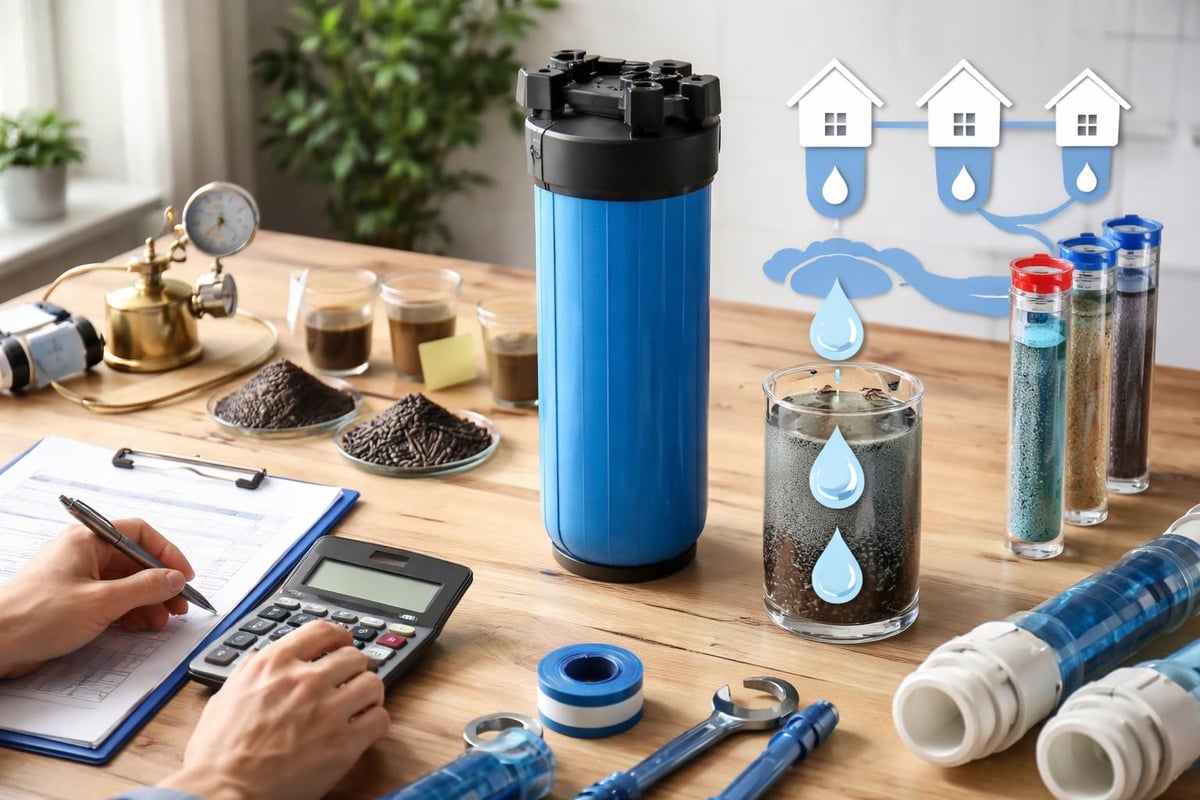
Comprehensive well water treatment often involves multiple filtration stages:
- Sediment pre-filtration removes particles protecting downstream carbon media
- Carbon filtration addresses organic chemicals, tastes, and odors
- Post-filtration polishing captures fine carbon particles
- Point-of-use treatment provides additional protection for drinking water
This layered approach maximizes system efficiency and extends carbon media lifespan. Many installations in Broward, Palm Beach, and Miami-Dade counties incorporate water treatment services that combine carbon filtration with water softening and UV disinfection for complete protection.
Installation Considerations for Well Systems
Installing a carbon filter for well water requires careful planning to ensure optimal performance and compliance with local codes. South Florida's specific regulations and climate conditions influence installation best practices.
Pre-Treatment Requirements
Well water often contains constituents that interfere with carbon filtration or rapidly exhaust the media. Addressing these issues before carbon filtration proves essential:
Iron and Manganese oxidize and precipitate within carbon beds, coating particles and reducing adsorption capacity. Wells with iron exceeding 0.3 mg/L or manganese above 0.05 mg/L typically require iron filtration systems installed upstream of carbon filters.
Sediment and Turbidity physically clog carbon beds and create channeling. Installing 5-micron sediment filters before carbon filtration extends media life and maintains flow rates.
Hydrogen Sulfide in concentrations above 1 mg/L may overwhelm standard carbon filters. Catalytic carbon or oxidation pre-treatment often proves necessary for wells with significant sulfur content.
System Location and Protection
Carbon filter installations require consideration of:
- Adequate space for tank size and service access
- Protection from direct sunlight degrading carbon
- Temperature control preventing freezing
- Drainage for backwash and maintenance
- Electrical connections for automatic systems
- Pressure regulation maintaining optimal flow
Point-of-entry installations treating all household water provide the most comprehensive protection. This configuration ensures filtered water throughout the property, protecting plumbing fixtures, appliances, and occupants.
Maintenance and Media Replacement
Carbon media for well water systems typically needs replacement every 3–5 years, depending on the carbon type, inlet water quality, and volume treated. Signs that carbon media needs replacement include returning odors or taste, elevated TDS readings from the filter outlet, or visual discoloration. In South Florida's hard well water, iron fouling can shorten carbon media life — which is why WaterLux always places an iron filter upstream of the carbon stage.
Regular maintenance maximizes the lifespan and effectiveness of carbon filtration systems. Unlike some water treatment technologies requiring frequent attention, carbon filters operate relatively maintenance-free between media replacements.
Backwashing Requirements
Backwashing reverses water flow through the carbon bed, lifting and rinsing the media to remove accumulated sediment and redistribute particles. This process prevents channeling and maintains proper flow characteristics.
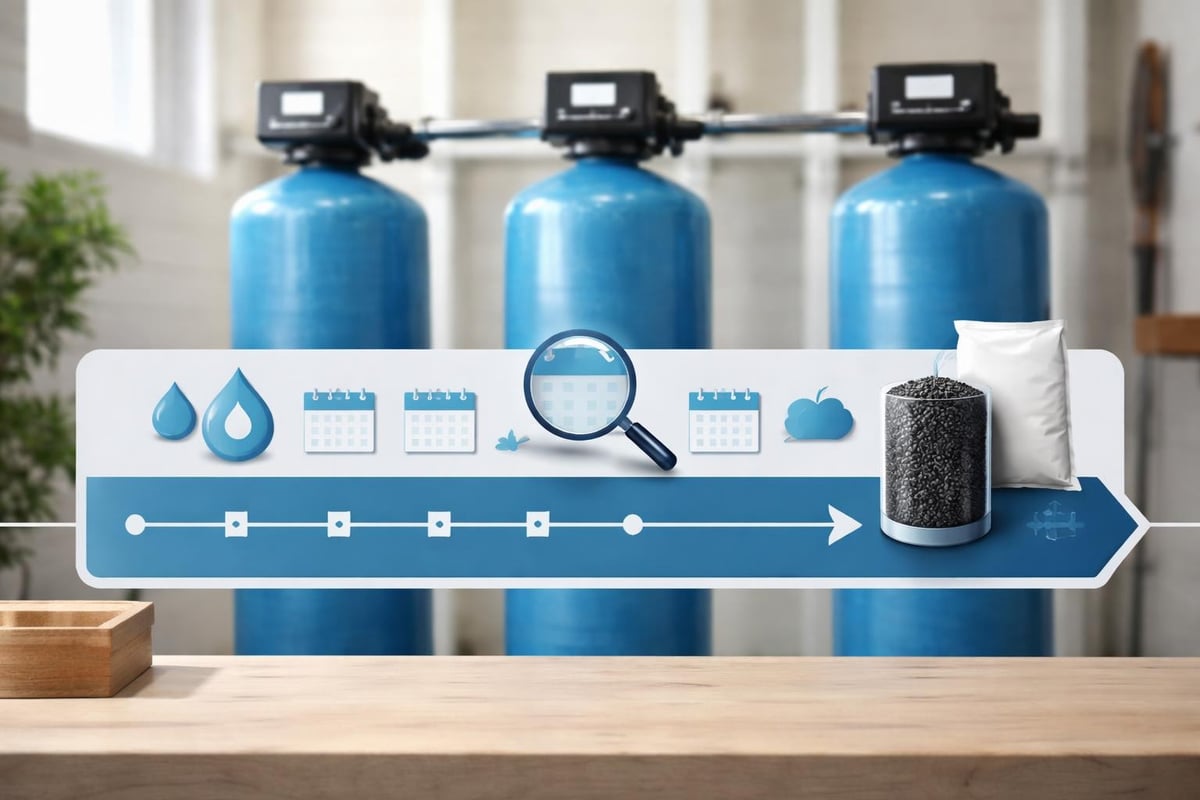
Automatic Backwashing Systems use time or volume-based controls initiating periodic regeneration cycles. Most well water applications benefit from backwashing every 3 to 7 days, depending on sediment levels and water usage.
Manual Backwashing requires the homeowner to initiate the regeneration cycle by adjusting valve positions. While less convenient, this approach eliminates electronic components that may fail in humid South Florida conditions.
Studies on microbial safety in carbon-treated well water emphasize the importance of proper maintenance preventing bacterial colonization within filter media.
Media Replacement Schedules
Carbon filtration capacity diminishes as adsorption sites become saturated with contaminants. Replacement intervals depend on:
- Water chemistry and contaminant concentrations
- Daily water consumption volumes
- Carbon type and quality
- Pre-treatment effectiveness
- Desired removal efficiency
| Household Size | Daily Usage (Gallons) | Typical Replacement Interval |
|---|---|---|
| 1-2 people | 50-100 | 3-5 years |
| 3-4 people | 150-250 | 2-3 years |
| 5-6 people | 300-400 | 1-2 years |
| 7+ people | 400+ | 12-18 months |
These estimates assume moderate contaminant levels. Wells with high organic chemical concentrations or those treating specific compounds like pesticides may require more frequent replacement.
Performance Monitoring
Regular testing ensures the carbon filter for well water continues protecting household members. Annual water testing should evaluate:
- Total organic carbon (TOC) levels
- Specific contaminants of concern
- Taste and odor characteristics
- Flow rate and pressure measurements
- Microbial indicators
North Dakota State University's water treatment guidance recommends maintaining detailed service records documenting installation dates, maintenance activities, and test results.
Comparing Carbon to Alternative Filtration Methods
Selecting the appropriate treatment technology requires understanding how carbon filtration compares to other well water solutions. Each method offers specific advantages for particular water quality challenges.
Carbon Filtration vs. Reverse Osmosis
Reverse osmosis (RO) systems force water through semi-permeable membranes, removing dissolved solids, minerals, and a broader range of contaminants than carbon filtration. However, RO systems waste significant water through drain discharge and operate at lower flow rates.
Many homeowners install point-of-use reverse osmosis systems at kitchen sinks for drinking and cooking water while using carbon filtration for whole-house applications. This combination provides comprehensive protection without the cost and waste of whole-house RO.
Carbon Filtration vs. Water Softeners
Water softeners address hardness minerals through ion exchange, replacing calcium and magnesium with sodium ions. These systems do not remove organic chemicals, tastes, or odors that carbon filters target.
South Florida's geology creates varying hardness levels across Broward, Palm Beach, and Miami-Dade counties. Properties with both hardness and organic contamination benefit from combining water softening with carbon filtration in series.
Carbon Filtration vs. UV Disinfection
Ultraviolet disinfection systems eliminate bacteria, viruses, and other microorganisms without chemicals. UV disinfection systems complement carbon filtration by addressing biological contamination that carbon cannot reliably remove.
The ideal configuration installs carbon filtration before UV treatment, as organic compounds in water can shield microorganisms from UV exposure and reduce disinfection effectiveness.
Cost Considerations and Return on Investment
Investing in a carbon filter for well water involves evaluating upfront costs, ongoing maintenance expenses, and long-term benefits. Understanding the complete financial picture helps homeowners make informed decisions.
Initial Investment Components
Complete carbon filtration system costs include:
- Carbon filter tank and media (From $800)
- Control valve and automation (From $300)
- Pre-filtration components (From $200)
- Installation labor (From $500)
- Plumbing modifications (From $200)
- Initial water testing (From $150)
Total installation typically ranges From $2,000 depending on system size, features, and site-specific requirements. Professional installation services ensure proper sizing and configuration optimized for specific water quality concerns.
Operating and Maintenance Costs
Annual operating expenses include:
- Electricity for automatic systems (From $20)
- Sediment filter replacements (From $50)
- Annual water testing (From $100)
- Carbon media replacement every 2-4 years (From $400)
- Service calls if needed (From $150 per visit)
Long-Term Value and Benefits
Carbon filtration delivers measurable returns through:
Health Protection by removing potentially harmful organic chemicals and improving water safety for household members. The value of preventing illness from contaminated water far exceeds system costs.
Appliance Longevity as filtered water reduces sediment and chemical damage to water heaters, dishwashers, washing machines, and other equipment. Extended appliance life offsets installation costs over time.
Property Value Enhancement since homes with comprehensive water treatment systems command premium prices in South Florida's real estate market. Buyers increasingly prioritize water quality when evaluating properties.
Reduced Bottled Water Expenses as improved taste and odor eliminate the need for purchasing drinking water. Average families spending From $500 annually on bottled water recover installation costs within 3-5 years.
Why WaterLux?
- 4.9-star rating from 100+ Google reviews
- Authorized Hague Quality Water dealer and Aquaphor distributor
- Over 14 years serving South Florida families
- families served across Broward, Palm Beach, and Miami-Dade Counties
- Free water testing — call 754-317-0104 to schedule. We show you exactly what's in your water
Selecting the Right Carbon Filter System
Choosing an appropriate carbon filter for well water requires evaluating specific needs, water chemistry, and budget constraints. The decision process involves several critical considerations.
Water Testing and Analysis
Comprehensive water testing identifies contaminants requiring removal and helps size the appropriate system. Essential tests include:
- Complete chemical analysis covering organic and inorganic compounds
- Bacterial testing for coliform and E. coli
- Specific tests for known regional contaminants
- Hardness, pH, and total dissolved solids measurements
- Flow rate and pressure assessments
Professional water testing services provide detailed analysis guiding system selection and design.
System Features and Automation
Modern carbon filtration systems offer various features enhancing convenience and performance:
- Demand-initiated regeneration reduces water waste by backwashing based on actual usage
- Flow meters track total gallons processed for accurate replacement scheduling
- Chlorine injection upstream of carbon filters extends media life for certain applications
- Bypass valves facilitate maintenance without disrupting household water supply
- Remote monitoring alerts homeowners to service requirements via smartphone apps
Certification and Standards
Quality carbon filter systems carry certifications from recognized testing organizations:
- NSF/ANSI Standard 42 for aesthetic effects including taste and odor reduction
- NSF/ANSI Standard 53 for health effects including specific contaminant removal
- NSF/ANSI Standard 61 for materials safety ensuring components don't leach contaminants
- WQA Gold Seal indicating independent verification of manufacturer claims
Choosing certified systems ensures reliable performance and validates manufacturer specifications. Resources like the well water filter buyer's guide help consumers evaluate different options and certifications.
Regional Considerations for South Florida
Well water characteristics vary significantly across South Florida's three-county service area. Understanding regional water quality patterns helps optimize system selection:
Broward County wells frequently encounter organic contamination from agricultural runoff and urban development, making robust carbon filtration essential.
Palm Beach County properties may face sulfur odors from deep aquifers along with tannins creating color issues that carbon filtration effectively addresses.
Miami-Dade County wells experience varying salinity levels near coastal areas, sometimes requiring carbon filtration combined with other technologies for complete treatment.
Protecting your well water with effective carbon filtration requires understanding your specific water quality challenges and selecting systems designed for optimal performance in South Florida conditions. Whether you're addressing taste and odor issues, removing organic chemicals, or creating comprehensive multi-stage treatment, professional guidance ensures you invest in the right solution. WaterLux brings decades of experience installing and maintaining water treatment systems throughout Broward, Palm Beach, and Miami-Dade counties, offering expert testing, customized system design, and reliable service that keeps your well water clean and safe for years to come.
Article written using RankPill.
Frequently Asked Questions
- What is the best water treatment for Florida well water?
- Florida well water (12.3 GPG before treatment hardness, high iron/sulfur) needs a 3-stage system: sediment filter (5 microns), carbon block (chlorine/odor), then iron/sulfur removal cartridge (targeting 3-6 mg/L typical levels). Point-of-use carbon filters alone are insufficient for well water's mineral load. Professional testing identifies what YOUR well contains.
- Do I need a water softener in South Florida?
- For well water in South Florida, yes—well hardness averages 10.8–22.2 GPG before treatment, versus 10.8–22.2 GPG before treatment from municipal sources. Without softening, well water causes 40% faster appliance degradation. A salt-based water softener (From $3,600 installed) protects plumbing, water heaters, and extends appliance life 5-7 years longer than unsoftened well water.
- What is a typical water treatment cost?
- For South Florida well water systems, expect From $2,500 for a complete setup including softener, carbon filter, and optional iron/sulfur removal. WaterLux has treated well-water homes in our service area. Call 754-317-0104 for a free well-water analysis and custom estimate.
- Does WaterLux offer free water testing?
- Yes. WaterLux provides free professional water testing for homeowners across Broward, Palm Beach, and Miami-Dade Counties. A technician tests your water on-site and explains exactly what contaminants are present. Call 754-317-0104 to schedule.
- How long has WaterLux been serving South Florida?
- WaterLux has been providing water treatment across South Florida for over 14 years, serving families in Broward, Palm Beach, and Miami-Dade Counties. We are an authorized Hague Quality Water dealer and Aquaphor distributor with a 4.9-star Google rating. Call 754-317-0104 for your free consultation.
Sources:
- EPA — PFAS Strategic Roadmap and Drinking Water Standards
- CDC/ATSDR — Per- and Polyfluoroalkyl Substances and Your Health
- Florida DEP — PFAS Monitoring in Florida Drinking Water
- NSF International — PFAS Reduction Certification for Water Filters
Ready for Better Water?
waterlux.com — Free water test & consultation
4.9★ across 108 Google reviews · licensed & insured.